
Basic Details
With striking confidence, versatile performances and a lineage rooted in Bollywood legacy, Akshaye Khanna stands as one of the most compelling actors of his generation. Born on 28 March 1975 in Mumbai, India, Akshaye Khanna is the son of legendary actor Vinod Khanna, and he carved his own space in Hindi cinema with his debut in the film Himalay Putra (1997). Growing up in a film family, Akshaye Khanna’s early exposure to movies shaped his aspirations, but his path wasn’t entirely smooth—it included the weight of expectation and finding his own voice. In this biography we’ll explore his early life, his breakthrough and evolving career, his personal stories and the legacy he’s creating.
Physical Stats and More
- Height
Approximately 5′10″
- Weight
70 kg
- Eye Colour
Dark Brown
- Hair Colour
Black
Biography
Akshaye Khanna was born into a Bollywood family and initially lived in the shadow of his father’s immense stardom. In interviews, Akshaye has spoken about how his father, Vinod Khanna, left for the Osho commune when Akshaye was about five, an event that impacted him deeply. Despite the privilege of being a star-kid, Akshaye’s own career journey required him to define his own identity. His debut film, Himalay Putra (1997) introduced him to audiences but didn’t immediately establish him as a top star.
As he took on more varied roles—romantic hero, lead, anti-hero, supporting actor—he gradually built a reputation for credible performances. He achieved commercial and critical success through films such as Dil Chahta Hai (2001) and Gandhi, My Father (2007). Over time, Akshaye Khanna demonstrated his ability to adapt and evolve, moving from conventional leading man to character actor, making his mark in strong supporting roles as well.
His career is an example of longevity and reinvention—avoiding flashes of hype, focusing on craft, and choosing roles that interested him more than just star status.
Relationships & More
Career
Early Career:
Akshaye Khanna made his debut with Himalay Putra in 1997, directed by Pankaj Parashar. Following this, he took on roles in films like Taal (1999) alongside Aishwarya Rai and Anil Kapoor.
Breakthrough & Versatility:
His role in Dil Chahta Hai (2001) cemented his status among the youth, while his villainous turn in Humraaz (2002) showcased his range. Over the years, he proved his mettle in films such as Gandhi, My Father, Section 375 (2019) and Drishyam 2 (2022).
Later Phase & Recent Work:
In recent years, Akshaye Khanna has embraced a variety of roles including nuanced character parts. He returned with strong performances in Ittefaq (2017), Section 375 (2019) and the blockbuster Drishyam 2 (2022). Beyond that, his upcoming project list includes films such as Dhurandhar (2025).
Other Details
- Hobbies
Public detail limited
- Favourite Actress
Not all publicly documented
- Favourite Actors
Not all publicly documented
- Favourite Movies
Not all publicly documented
- Favourite Dishes
Not all publicly documented
- Zodiac Sign
Aries
- Caste
Not publicly emphasized
- Religion
Hinduism
Contributions Beyond Work
Akshaye Khanna’s contribution to Indian cinema is about strong, consistent performances and versatility. Though born into a star family, he carved a niche with his own choices, proving that sustaining a career in Bollywood is about skill and relevance. His willingness to shift from leading roles to character roles, and his focus on performance rather than glamour, serve as a model for aspiring actors.
The Legacy of Akshaye Khanna
Akshaye Khanna stands out as an actor who doesn’t cling to stardom by default but earns it through craft, persistence and evolution. His body of work—from youthful hero to layered character actor—reflects both adaptability and depth. He may not seek the limelight, but his performances consistently shine.
Other Facts:
- Akshaye Khanna has spoken candidly about his father’s absence during childhood when Vinod Khanna joined the Osho commune.
- He has been selective about working with his father on-screen—he once said working alongside his father would be daunting because his father had such presence.
- He keeps a relatively low profile in media, is not overtly active on social media, and tends to avoid tabloid publicity.
- His career trajectory is often cited as an example of “talent over hype”—a star with sustained relevance rather than constant publicity.
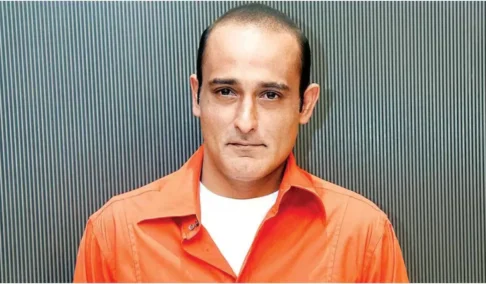
| Real Name | Akshaye Khanna |
| Born | 28 March 1975 (age 51 years) |
| Nationality | Indian |
| Occupations | Actor |
| Year Active | 1992 - Present |